
Why a Bad Mood Makes Everything Feel Worse
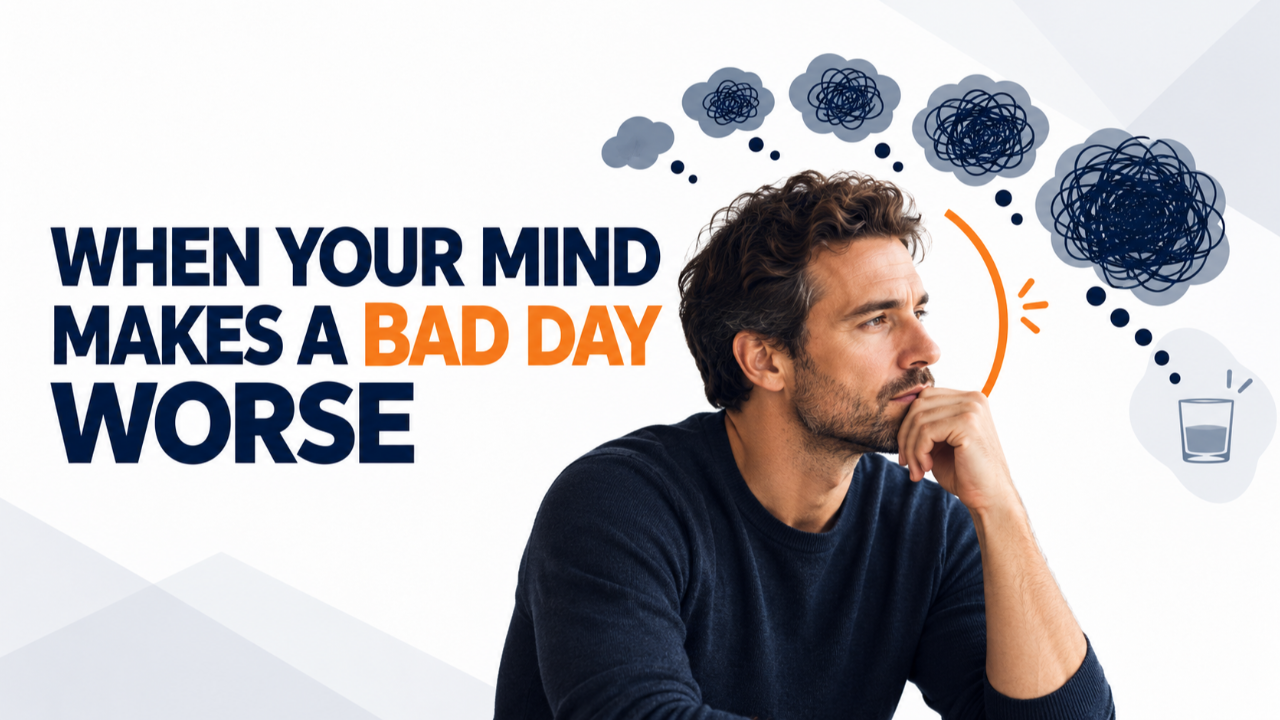
Why a Bad Mood Makes Everything Feel Worse
Have you noticed that once you feel annoyed, stressed or anxious, your mind starts finding even more reasons to feel that way?
A bad mood can change what you notice, how you interpret what is happening and what you imagine might happen next.
The emotion influences your thoughts, the thoughts intensify the emotion and one difficult moment can quickly become an entire bad day.
The argument that never happened
Recently, I was walking the dogs after a broken night’s sleep.
It was raining, the school run had been rushed and the dogs had already done four poos between them. I had used my final bag and was still about fifteen minutes from home.
As I walked, I imagined one of the dogs going again. Except this time, an environmental officer saw it and tried to give me a fine.
I began defending myself and explaining that I’d already used four bags. The imaginary officer refused to listen, so the situation escalated. Before long, I was considerin...
Sustainable Sobriety Is More Than Not Drinking

Sustainable Sobriety Is More Than Not Drinking
“You’ve got to keep doing the work.”
It is something people often say about sobriety.
But what does “doing the work” mean once alcohol is no longer the main problem in your life?
In the beginning, the work can be obvious. You are changing routines, responding to urges, getting through your first alcohol-free weekend and discovering what happens at five o’clock when your brain suggests that a drink would help.
Then, gradually, something changes.
You stop merely getting through the holiday, wedding, birthday or stressful week without alcohol. You begin looking forward to those experiences without it.
Not drinking stops being the main thing you think about.
That is real progress.
The aim is not to spend the rest of your life waking up every morning thinking, “I must not drink today.” Alcohol does not need to remain at the centre of your life.
But that does not mean the work is finished.
It means the work changes.
What is sustainab...
How to Stay Motivated to Stop Drinking: The 3 Stages of Sober Motivation
If your motivation to stop drinking has started to fade, it doesn’t necessarily mean you want the change any less.
It may simply mean that the reason which helped you begin is no longer the reason you need today.
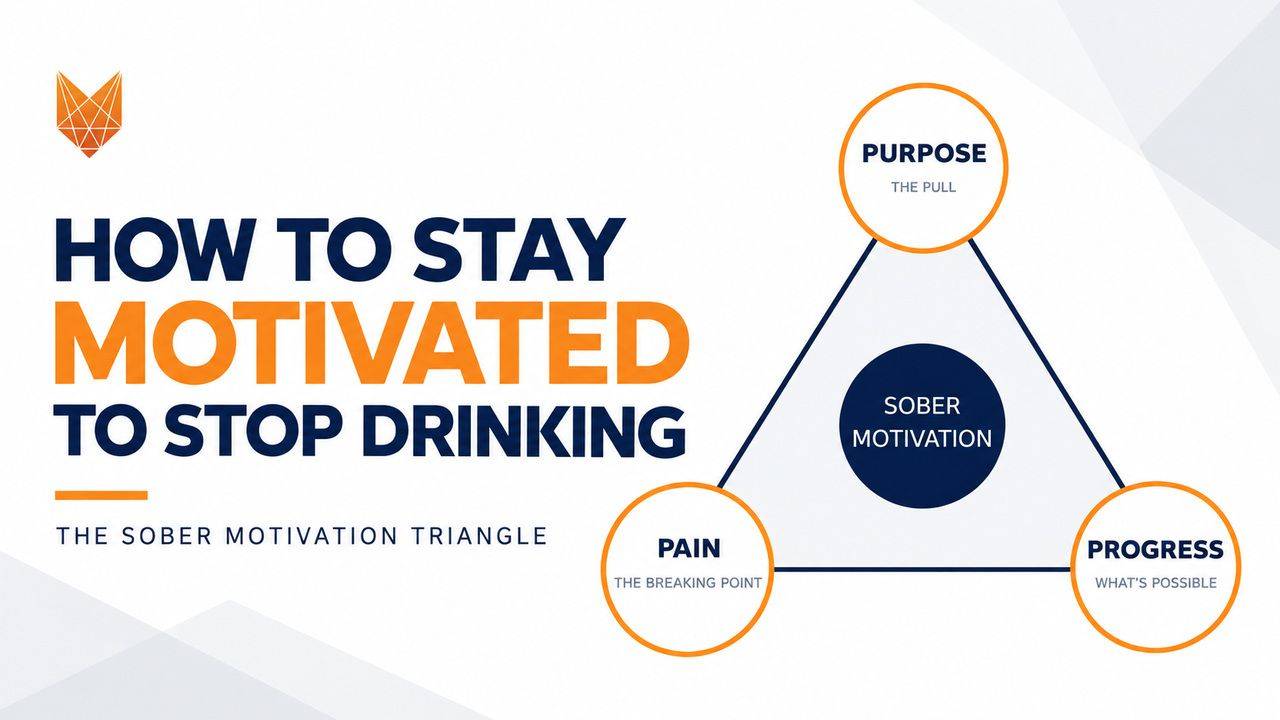
At first, pain often creates the motivation to stop drinking. As your life improves, progress gives you a reason to continue. Eventually, you need a compelling future pulling you forwards.
I call this the Sober Motivation Triangle:
-
The Breaking Point
-
What’s Possible
-
The Pull
Understanding these three stages can help you reconnect with your reasons for not drinking and build a life in which alcohol becomes increasingly irrelevant.
Why does motivation to stop drinking change over time?
Last week I met up with a cool dude named Davey.
He flew all the way from Sydney to London just to see me...
I jest.
He was travelling around Europe and reached out to ask if I fancied meeting up.
So we went for a coffee and a walk. We talked about all things sobriety,...
The Mental Game of Sober: How to Change Your Relationship With Alcohol
For most men, rethinking alcohol isn’t just about stopping drinking.
It’s about what happens in your head once you start questioning it.
I’ve worked with hundreds of men over the years, and one thing is clear: the men who change their relationship with alcohol long term don’t rely on willpower alone. They develop the mental skills that help them think, respond, and see themselves differently.
That’s what I call the Mental Game of Sober.
Why the mental side of sobriety matters
Many men already know alcohol isn’t helping them anymore. Or at least, it helps in one way but causes problems in others. Energy drops. Motivation fades. Confidence takes a hit. Life feels smaller than it should.
The challenge isn’t always stopping drinking. It’s learning how to live without alcohol being the go-to solution for stress, boredom, reward, or switching off.
That’s where mindset matters.
Imagining life without alcohol
Before changing behaviour, it helps to change perspective.
Imagine what lif...
Five Years Alcohol-Free: What Really Changes Over Time

The compounding effect of small daily decisions
Failure Resistance: Why Fear of Getting It Wrong Keeps You Stuck
Where the fear of failing comes from
Why Sobriety Doesn’t Feel Fun at First (And Why That’s Not a Problem)

Why early sobriety feels flat
How David Quit Drinking and Rebuilt His Health, Identity and Life

For a lot of men, the turning point with alcohol is not one big dramatic rock bottom. It is a quiet, honest moment where you realise you cannot keep living the way you have been. That is where David found himself.
He was a daily drinker, carrying over 140 kilos, with health warnings piling up, a family history of problems, and a constant belief in the background that “one day” he would learn to moderate. He tried time off alcohol, he tried coming back to it, and he tried to outwork the problem with exercise. Like many men, he could function, hold down a job, be a dad and a partner, but inside he knew something was not right.
In this episode, David shares what actually made the difference, why moderation never stuck, how his health became the wake up call he could no longer ignore, and how understanding his ADHD completely changed how he sees his drinking, his brain and his life.
Here are some of the biggest takeaways from his journey.
When health becomes the wake up call you can’t ...
Why You Can’t Stop Thinking About Drinking (Even When You Want To)
If you’ve ever tried to stop drinking and noticed your mind suddenly filling with thoughts about alcohol, you’re not alone. This is one of the most common experiences men face when they begin rethinking alcohol. It feels confusing and frustrating, and it can make you question whether you’re actually making progress. The truth is that these thoughts aren’t signs of failure. They’re simply signs that your brain is doing what it’s been trained to do over years of repetition.
This article will help you understand why these thoughts appear, why resisting them makes them stronger, and how to use a simple tool to reduce pressure, stay calm, and stay in control.
Why resisting thoughts makes them louder
Many men assume that once they decide to stop drinking, the thoughts about drinking should stop as well. But the brain doesn’t work that way. When you resist a thought about alcohol, your brain interprets that resistance as a sign that the thought is important or even dangerous. That tension ...
7 Habits That Helped Me Stop Drinking (And Will Help You Too)
1. Swapping alcoholic drinks for zero-alcohol options
“It was one of my most helpful tools in the beginning… it fulfilled that need of having a drink in my hand, except I didn’t have any of the bullshit that came with it.”
