
Five Years Alcohol-Free: What Really Changes Over Time

The compounding effect of small daily decisions
Failure Resistance: Why Fear of Getting It Wrong Keeps You Stuck
Where the fear of failing comes from
Why Sobriety Doesn’t Feel Fun at First (And Why That’s Not a Problem)

Why early sobriety feels flat
How David Quit Drinking and Rebuilt His Health, Identity and Life

For a lot of men, the turning point with alcohol is not one big dramatic rock bottom. It is a quiet, honest moment where you realise you cannot keep living the way you have been. That is where David found himself.
He was a daily drinker, carrying over 140 kilos, with health warnings piling up, a family history of problems, and a constant belief in the background that “one day” he would learn to moderate. He tried time off alcohol, he tried coming back to it, and he tried to outwork the problem with exercise. Like many men, he could function, hold down a job, be a dad and a partner, but inside he knew something was not right.
In this episode, David shares what actually made the difference, why moderation never stuck, how his health became the wake up call he could no longer ignore, and how understanding his ADHD completely changed how he sees his drinking, his brain and his life.
Here are some of the biggest takeaways from his journey.
When health becomes the wake up call you can’t ...
Why You Can’t Stop Thinking About Drinking (Even When You Want To)
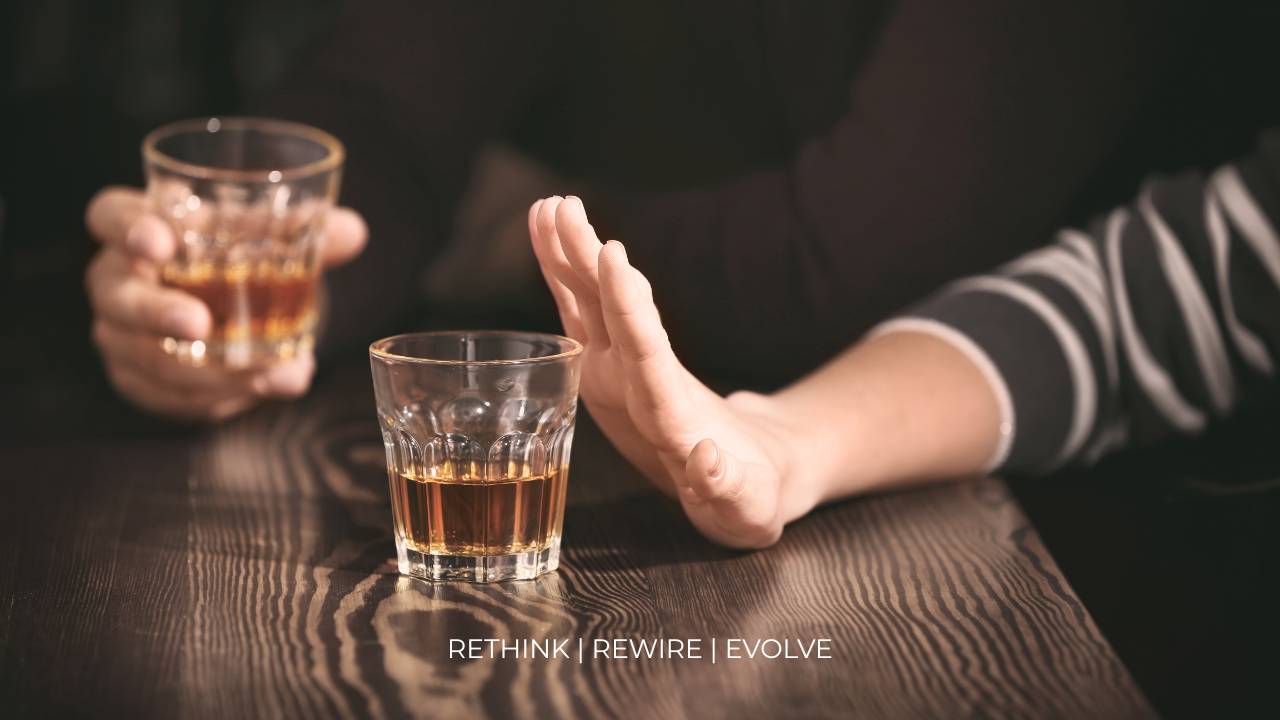
If you’ve ever tried to stop drinking and noticed your mind suddenly filling with thoughts about alcohol, you’re not alone. This is one of the most common experiences men face when they begin rethinking alcohol. It feels confusing and frustrating, and it can make you question whether you’re actually making progress. The truth is that these thoughts aren’t signs of failure. They’re simply signs that your brain is doing what it’s been trained to do over years of repetition.
This article will help you understand why these thoughts appear, why resisting them makes them stronger, and how to use a simple tool to reduce pressure, stay calm, and stay in control.
Why resisting thoughts makes them louder
Many men assume that once they decide to stop drinking, the thoughts about drinking should stop as well. But the brain doesn’t work that way. When you resist a thought about alcohol, your brain interprets that resistance as a sign that the thought is important or even dangerous. That tension ...
7 Habits That Helped Me Stop Drinking (And Will Help You Too)
1. Swapping alcoholic drinks for zero-alcohol options
“It was one of my most helpful tools in the beginning… it fulfilled that need of having a drink in my hand, except I didn’t have any of the bullshit that came with it.”
How Recovery Changes Leadership, Culture, and Connection with Emily Pearson

“Addiction and recovery are the last taboo of workplace wellbeing.” – Emily Pearson
The conversation starts with a truth most people avoid
Patrick: “Your own journey through addiction and what’s on the other side, that transformation, matters to so many men.”
Emily: “We’ve raised awareness on mental health and menopause. But we’re still not talking about addiction and recovery to the levels we should be.”
Who Am I Without Alcohol In My Life?

Who Am I Without Alcohol?
For many men, especially those who have developed a long-standing relationship with drinking, the question “Who am I without alcohol?” can feel daunting. This question often arises when someone begins to rethink their relationship with alcohol—perhaps after realising that it’s no longer serving them in the ways they once thought it did.
Alcohol, for many, becomes part of an identity, a lifestyle, or even a coping mechanism. Whether it's social events, relaxing after a hard day's work, or dealing with life’s stresses, alcohol often plays a significant role. So, imagining a life without it can feel like a loss of identity. You might wonder: “How do I socialise? How do I unwind? Who am I in those moments where I would usually drink?”
Why is This Question so Challenging?
The challenge stems from the years of habits, patterns, and associations you've built around drinking. Alcohol becomes linked with certain activities, moods, and emotions. For instance, you mi...
Dealing with Disappointment and Triggers to Drink Alcohol

Dealing with Disappointment: Understanding Triggers and Finding New Paths
Disappointment is one of those emotions we all encounter, and it can hit hard—especially when things don’t go the way we expect. Whether it’s waiting for results that never seem to come, or feeling let down by situations or people, disappointment has a way of sneaking up on us. And when it does, it can easily trigger unhealthy habits like overeating or drinking to cope.
In this article, I’ll explore why we feel disappointment, what it’s trying to tell us, and how to find healthier ways to deal with it—so you don’t fall into those old habits of using alcohol or food to escape.
Why Do We Feel Disappointed?
At its core, disappointment happens when our reality doesn’t match our expectations. We set goals, make plans, and picture outcomes, but when things don’t unfold as we imagined, disappointment hits. A common source of this feeling is having rigid expectations, where we expect a particular outcome without allo...
