
Why a Bad Mood Makes Everything Feel Worse
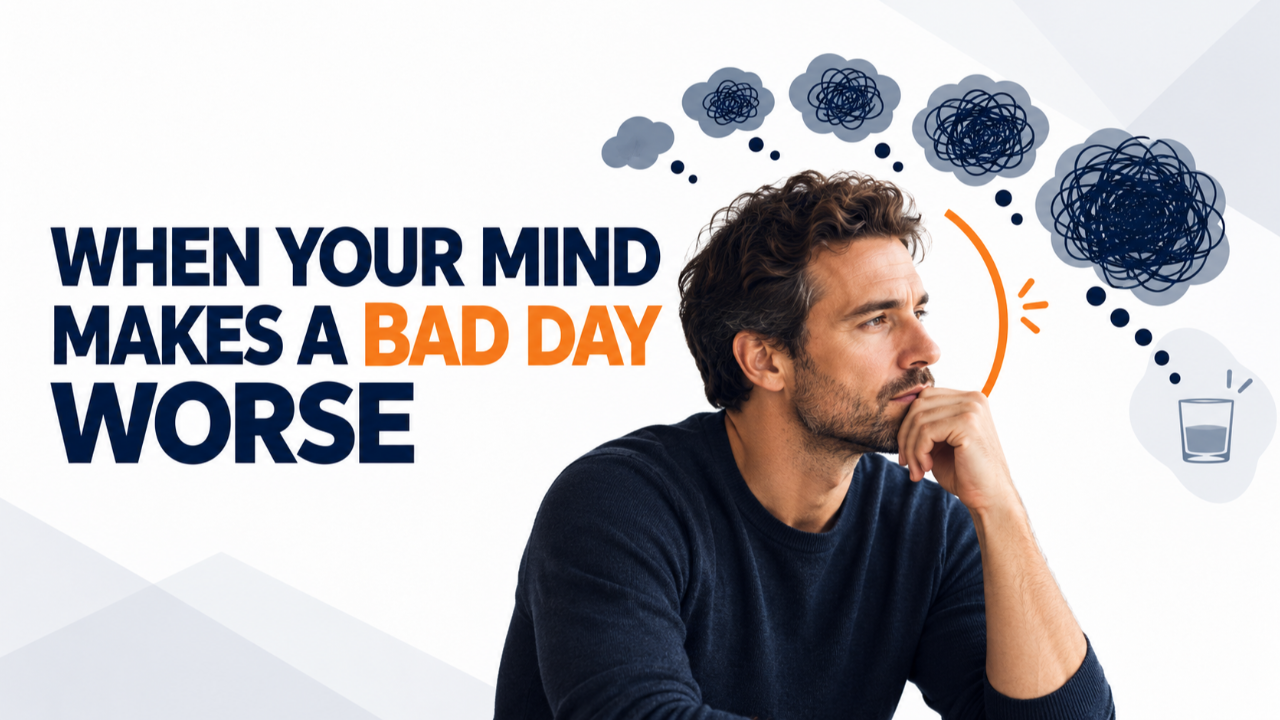
Why a Bad Mood Makes Everything Feel Worse
Have you noticed that once you feel annoyed, stressed or anxious, your mind starts finding even more reasons to feel that way?
A bad mood can change what you notice, how you interpret what is happening and what you imagine might happen next.
The emotion influences your thoughts, the thoughts intensify the emotion and one difficult moment can quickly become an entire bad day.
The argument that never happened
Recently, I was walking the dogs after a broken night’s sleep.
It was raining, the school run had been rushed and the dogs had already done four poos between them. I had used my final bag and was still about fifteen minutes from home.
As I walked, I imagined one of the dogs going again. Except this time, an environmental officer saw it and tried to give me a fine.
I began defending myself and explaining that I’d already used four bags. The imaginary officer refused to listen, so the situation escalated. Before long, I was considering running away and imagining the police becoming involved.
I could feel genuine anger and outrage building inside me.
Then I caught what was happening and laughed.
There was no environmental officer, no fine and no police. I was emotionally reacting to a future my mind had invented.
My mind wasn’t simply reporting what was happening.
It was creating a story that matched how I already felt.
What is your emotional home?
Tony Robbins uses the term “emotional home” to describe the emotional states that become so familiar that we return to them automatically.
Your emotional home isn’t necessarily somewhere you enjoy being. It is simply somewhere your mind knows how to reach without directions.
It might be anxiety, irritation, pressure, resentment or the feeling that everything rests on your shoulders.
When you experience an emotional state regularly, it can begin to feel like part of your personality.
You might say:
“I’m just an anxious person.”
“I’ve always had a short fuse.”
“I work better under pressure.”
But some of what feels like personality may actually be a well-practised emotional pattern.
The circumstances change, but you keep arriving at the same emotional destination.
Why does a bad mood affect your thinking?
We often think about emotions in one direction. Something happens, we think about it and that thought influences how we feel.
But how we already feel can also influence the thoughts our mind produces.
Psychologists sometimes call this mood-congruent thinking. When you feel irritated, anxious or under pressure, your mind becomes more likely to notice and remember things that match that emotional state.
You start the day feeling tired. Then an email arrives, somebody leaves something lying around or the driver in front of you is moving too slowly.
On another day, none of it would bother you much. Today, each thing appears to confirm that people are inconsiderate, nobody respects your time and everything is being left to you.
The events might have nothing to do with one another, but your mind joins them together into a single story.
Your existing emotion has effectively become a search prompt:
“Give me more reasons to feel this way.”
Naming what you actually feel
It is often said that English contains more than 3,000 words connected with feelings and emotions, yet most of us rely on the same few:
Fine. Stressed. Angry. Anxious. Pissed off.
But you might not simply be angry. You might feel dismissed, overlooked or powerless.
You might not simply be stressed. You might feel trapped, inadequate or afraid of letting someone down.
Naming the emotion more precisely doesn’t make it disappear. It helps you understand what is happening instead of reacting to one large, undefined feeling.
How emotional patterns can fuel drinking
Many men believe they drink because of what happened during the day.
They had a difficult meeting, the children were loud, a client complained or their partner said something they didn’t like.
Those events may be real, but the desire to drink can be intensified by the emotional story built around them.
A late email, a noisy house and a difficult conversation can become evidence that nobody respects your time, everything is left to you and you can never switch off.
By the time you reach for a drink, you may not simply be trying to escape the day.
You may be trying to escape the emotional reality your mind has created around the day.
Alcohol can change how you feel temporarily. It might quieten the noise or soften the irritation for a few hours.
But it doesn’t change the underlying emotional pattern.
This is why changing your relationship with alcohol involves more than removing the drink. It also involves understanding the thoughts and emotions that made alcohol feel necessary in the first place.
Three simple ways to interrupt the spiral
You don’t need a complicated process or a perfectly positive thought. You only need to create a little space between the emotion and the story developing around it.
Laugh
Sometimes your mind becomes so dramatic that noticing the absurdity can loosen its grip.
That is what happened to me. I had invented a man, argued with him and nearly been arrested, all while quietly walking through Watford.
Laughing didn’t make my frustration wrong. It helped me step outside the story.
Breathe
Take a few slow, deliberate breaths and make the exhale slightly longer.
This isn’t about forcing yourself to feel calm. It is about creating enough of a pause to recognise what your mind is doing.
You might say:
“I’m annoyed, and my mind is looking for more reasons to be annoyed.”
Move your body
Stand up, shake out your arms, stretch, walk around or move into a different room.
Emotions don’t only happen in your thoughts. You also experience them in your body. Changing your physical state can interrupt the momentum and give your mind something different to respond to.
You’re not trying to avoid the emotion. You’re preventing it from making every decision for you.
What is happening and what have you added?
You don’t consciously choose every emotion or the first thought your mind produces.
The choice becomes more available when you recognise what is happening.
Ask yourself:
-
What am I feeling right now?
-
What has actually happened?
-
What has my mind predicted, assumed or invented?
-
What does this emotional state make me want to do?
-
Is this a familiar place for me?
The goal isn’t complete control over everything you think and feel. It is having more awareness of whether you want to keep following the familiar route.
Listen to the podcast episode
Listen to Episode 259 of The Alcohol ReThink Podcast, When Your Mind Makes a Bad Day Worse:
Change the patterns behind your drinking
DISRUPT is my signature group coaching programme for men who are ready to change their relationship with alcohol.
You’ll learn to understand the thoughts, emotions and patterns that have been fuelling your drinking, interrupt the habits that keep pulling you back and handle stress, pressure and discomfort without needing alcohol to change how you feel.
The goal isn’t to spend the rest of your life trying not to drink. It is to understand yourself so much better that alcohol no longer feels like the answer.
